
Roof Replacement in Ceres River Bluff, Ceres, CA
In short: In short: this page covers roof replacement in Ceres River Bluff, CA 95307 — newer subdivisions around the 76-acre River Bluff Regional Park and the Tuolumne River corridor. River-adjacent shade, tree debris, and humidity shape the scope here; tile underlayment checks and valley maintenance lead the conversation. First step: a free inspection with photos of your underlayment and valleys.
| Area | Ceres River Bluff, Ceres, CA |
|---|---|
| ZIP code | 95307 |
| Housing | Newer subdivisions, 1990s–2010s; concrete tile and architectural shingle, near river corridor |
| Key routes | Hatch Rd; Ceres River Bluff Regional Park (3761 E Hatch Rd) |
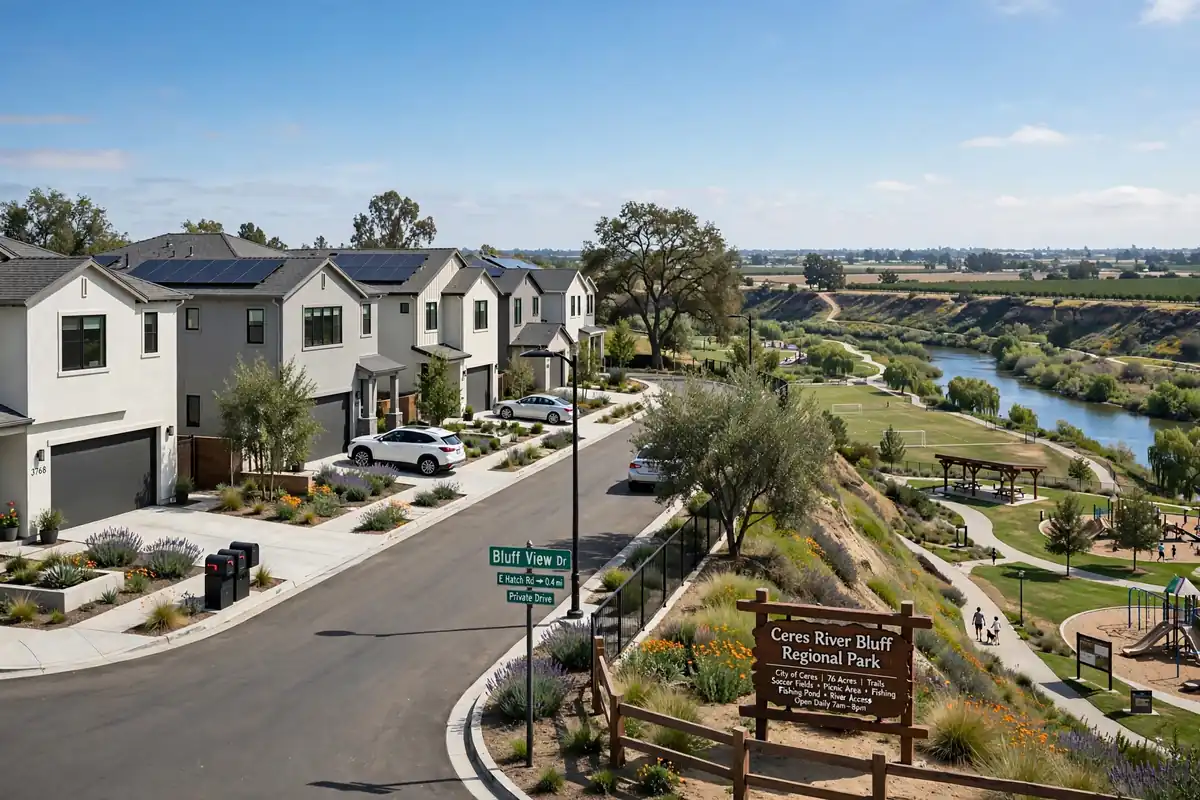
Near the regional park, where newer homes back toward open space. Dust and sun exposure are the main aging factors.
Roofing Needs in Ceres River Bluff, CA 95307
Ceres's triple-digit Central Valley heat take a steady toll on roofs across Ceres River Bluff. Homes here typically wear cool-roof rated architectural shingles are increasingly popular for cutting summer cooling costs — and extreme heat and thermal cycling mean small issues escalate fast. Our free inspection documents everything with photos.
Replacement Services Available in Ceres River Bluff
- Commercial Roof Replacement
- Asphalt Shingle Roof Replacement
- Tile Roof Replacement
- Metal Roof Replacement
- Flat Roof Replacement (TPO & EPDM)
- Storm Damage Roof Replacement
Nearby Areas We Also Serve
Bing Cherry
Roof replacement in Bing Cherry, Ceres.
Whitmore Ranch
Roof replacement in Whitmore Ranch, Ceres.
Smyrna Park
Roof replacement in Smyrna Park, Ceres.
East Ceres
Roof replacement in East Ceres, Ceres.
Replacement Services by Type in Ceres River Bluff
- Asphalt Shingle Roof Replacement in Ceres River Bluff
- Commercial Roof Replacement in Ceres River Bluff
- Emergency Roof Replacement in Ceres River Bluff
- Energy-Efficient Cool Roof Replacement in Ceres River Bluff
- Flat Roof Replacement (TPO & EPDM) in Ceres River Bluff
- Insurance Claim Roof Replacement in Ceres River Bluff
- Metal Roof Replacement in Ceres River Bluff
- Partial Roof Replacement in Ceres River Bluff
- Roof Replacement Warranties in Ceres River Bluff
- Roof Tear-Off & Redecking in Ceres River Bluff
- Storm Damage Roof Replacement in Ceres River Bluff
- Tile Roof Replacement in Ceres River Bluff
Helpful Guides
Roof Warranties Explained: What Ceres Homeowners Actually Get
Guide from Roof Replacement Solutions.
12 Questions to Ask Before Hiring a Roofing Contractor in Ceres
Guide from Roof Replacement Solutions.
Roofing reality in Ceres River Bluff
The River Bluff area grew up around the regional park — 76 acres of soccer fields, trails, wetlands, and the Tuolumne River bluff at 3761 E Hatch Rd — and its housing is the newest in Ceres: 1990s–2010s subdivisions in concrete tile and architectural shingle. The roofs are young, but the setting works them: mature trees drop leaves, seeds, and branches into valleys and gutters; river-corridor shade keeps north slopes damp enough for algae streaking; and humidity runs higher than in the open tracts. The dominant service call here is not age — it is debris-driven valley trouble and the underlayment clock starting on the earliest 1990s tile installs.
What River Bluff roof work involves
On tile homes approaching the 20–25 year underlayment window, the signature scope is lift-and-relay: tiles lifted, stacked, and labeled; new high-temperature underlayment doubled in valleys; new battens and flashing; tiles reset. On shingle homes, replacement follows the standard full-system scope with ventilation correction. Every River Bluff scope includes a valley and debris-management plan — valley clearance, gutter sizing for the tree load, and the maintenance checklist that keeps the system clear between inspections. Shade-side algae gets the copper-granule shingle specification where it applies.
Planning around the river corridor
Two practical notes. First, the tree canopy that makes this area beautiful is also the maintenance load: budget the annual valley and gutter clearance, and the roof will age on schedule instead of ahead of it. Second, storm response: when Delta wind events move through the river corridor, we prioritize this area's inspections because wind-thrown branches find the vulnerable flashing first. The free inspection includes the valley photo survey — the five-minute read that tells you whether maintenance or replacement is the right next step.
Newer roofs: the monitoring plan
Young roofs do not need replacement — they need monitoring, and the plan is simple: the free photo survey every three years once the roof passes year 15, valley clearance every fall, and the tile-lift check on the underlayment clock for tile homes. This light program catches the small things (a slipped tile, a debris-packed valley) while they are small. The most expensive roof problem in River Bluff is the one nobody looked at for a decade.
The shade-and-debris maintenance rhythm
River Bluff's beauty — the mature trees, the river corridor — is also its maintenance load. Annual valley and gutter clearance, the shade-side algae check, and the underlayment photo survey every few years on tile homes: this light rhythm keeps the setting from aging the roof ahead of schedule. We set it at closeout with a written checklist; follow it and the roof ages on the warranty's terms, not the trees'.
The canopy maintenance calendar
Set it once and follow it: valley and gutter clearance every fall after the leaf drop, the shade-side algae check every spring, the tile underlayment photo survey every three years once the roof passes year 15. This is the entire maintenance program for a River Bluff roof — three calendar entries that keep the setting from writing the roof's story. We hand you the calendar at closeout; the roofs that follow it age on schedule.
The first-year checkup
One year after installation, we come back for the free first-year checkup: seal strips verified set, flashing and valleys inspected after their first storm season, debris patterns read against the maintenance plan. It is a short visit with an important job — confirming the new system settled exactly as designed, and adjusting the maintenance calendar to what the site actually taught us. The checkup is on us; the confidence is yours.
Frequently Asked Questions
Do you replace roofs in Ceres River Bluff?
Yes — Roof Replacement Solutions regularly completes roof replacements throughout Ceres River Bluff and the wider Ceres area. Call (888) 974-0663 for a free on-site estimate.
How much does roof replacement cost in Ceres River Bluff?
Pricing in Ceres River Bluff follows Ceres-wide rates: architectural shingle replacement typically runs $9,000 to $15,000 for an average home, depending on size, pitch, and deck condition.
Do the trees near the river damage roofs?
They load them, which is different from damaging them. Leaves and seeds in valleys hold moisture against the system and feed algae; branches abrade shingles in wind. The answer is maintenance rhythm — annual valley and gutter clearance — not different materials. We set that rhythm at closeout with a written checklist.
My tile roof is from the late 1990s. What should I watch for?
The underlayment clock. At 20–25 years in Valley heat, the waterproofing beneath your tiles is entering its renewal window even though the tiles look new. Watch for valley leaks in winter storms — the classic first symptom. A free tile-lift inspection with photos reads the clock directly: years of life left, or time to plan the relay.
Is algae staining covered or preventable?
Preventable going forward: algae-resistant shingles with copper-lined granules stop the black streaking on shaded slopes. Existing staining is cosmetic and usually removable with proper cleaning (never pressure washing — it strips granules). We specify the resistant blend on every shaded replacement as standard.
Storm response near the river
When Delta wind events move through the river corridor, branches find the vulnerable flashing first. After any major wind event, walk the property, photograph debris, look up from across the street for lifted tabs — then call. Our post-storm inspections in this area are prioritized because early documentation turns a small repair into a handled one instead of a winter leak.